
Essential Tips for Selecting the Right Junk Removal Service

How to Choose the Right Junk Removal Service — What to Look For
Picking the right junk removal service saves you time, cuts down on hassle, and makes sure your items are disposed of responsibly. This guide breaks down what junk removal companies do, why the choice matters, and how the right provider protects your property and the environment. You’ll learn to identify the service type you need, check a company’s reliability, compare pricing models, evaluate green practices, and set clear expectations for scheduling and customer support. Use the checklists, comparison notes, and inspection questions below to get accurate estimates and avoid surprises. By the end, you’ll have a simple, step‑by‑step way to match your job—residential, commercial, or construction—to a qualified provider while maximizing reuse and recycling.
What Types of Junk Removal Services Do You Need?
Start by matching your items, property type, and timing to the right service category. Junk removal covers single-item pickups, residential clearouts, commercial cleanouts, construction debris hauling, and full property cleanouts — each needs different crew sizes, trucks, and disposal routes. Choosing the correct category saves money and speeds scheduling because providers send the right truck, secure permits when needed, and line up partners. Identifying your job also shows whether special handling (appliances, hazardous materials, oversized items) is required before you request an estimate. Below we outline common service types and how volume and urgency change the approach.
Which Junk Items Should You Remove: Furniture, Appliances, or Construction Debris?
Furniture, appliances, yard waste, and construction debris are typical categories that follow different disposal paths. Appliances can hold refrigerants or oils that certified technicians must drain, while electronics usually need e‑waste recycling instead of landfill disposal. Construction jobs mix wood, drywall, metal, and concrete and are often charged by weight or material type because disposal costs vary. Make an itemized list and note any special handling needs when you ask for a quote — that lets providers plan the right equipment and partners and keeps your job compliant with local rules.
How Does Junk Volume and Urgency Affect Your Service Choice?
Volume and urgency determine crew size, truck capacity, and price: one couch is handled very differently than a full basement cleanout. Small, single‑item jobs are often per‑item or small‑load flat rates, while large cleanouts use volume or weight pricing and may need multiple trips or a larger crew. Same‑day requests depend on truck routing and availability; providers often save same‑day slots for smaller or prioritized jobs and fit larger clearouts in when possible. Estimating volume ahead and telling the company how urgent the job is will get you a more accurate quote and a realistic arrival window.
Best Price Junk Removal covers furniture, appliances, yard waste, construction debris, and full cleanouts, and we offer free estimates to match your needs to the right service. Calling with a clear item list helps speed up the estimate and determines whether you need a truckload, weight‑based haul, or multiple crews.
How Do You Evaluate Junk Removal Providers for Reliability and Trust?

Reliability comes from verifiable credentials, steady service history, and clear communication. A trustworthy company can show licensing and insurance, explain local disposal rules, and provide recent reviews and job photos. Look for patterns in feedback — response times, care during handling, and whether disposal promises were kept — rather than isolated ratings. Below are practical vetting steps and red flags to watch for when choosing a removal partner.
Why Are Licensing and Insurance Critical When Selecting a Junk Removal Company?
Licensing and insurance protect you if property damage, worker injury, or illegal disposal happens during removal; without them, liability can fall on the homeowner or business. Licensing shows the company follows local waste rules, and insurance covers on‑site incidents. When you call, ask for the insurer’s name, policy type, and whether they’ll provide certificates — those documents give you reassurance. You can also verify credentials through local agencies or business listings before scheduling.
How Can Customer Reviews and Reputation Guide Your Decision?
Customer reviews reveal consistency — punctuality, professionalism, and sticking to estimates — and often include photos that back up disposal or donation claims. Favor recent, detailed reviews that describe similar jobs and note any follow‑up from the company. Be wary of vague perfect scores without specifics, repeated reports of hidden fees, or accusations of improper dumping. Use review patterns to confirm licensing and insurance, and prioritize companies that communicate clearly and have verifiable local experience.
Practical checklist for vetting providers:
Ask for proof of licensing and liability insurance before you book.
Look at recent customer photos and testimonials for jobs like yours.
Find out how the company handles disputes or unexpected extra costs.
These steps narrow your choices to providers with clear credentials and consistent communication, which leads into comparing pricing and estimate accuracy.
What Pricing Factors Should You Consider When Choosing a Junk Removal Service?
Junk removal pricing usually follows one of four models: volume‑based, weight‑based, per‑item, or flat‑rate. Knowing how each works helps you avoid surprises. A good quote lists labor, hauling, disposal fees, taxes, and potential extra charges like stairs or hazardous handling. A transparent written estimate — remote or on‑site — lets you compare offers and pick the best value. Below we explain the common models and give simple examples to make the differences clear.
How Does Junk Removal Pricing Work: Volume, Weight, and Flat Rates Explained?
Volume pricing charges by truck space (cubic yards) and is handy for mixed household loads but can be inefficient for very heavy single‑material jobs. Weight pricing applies to dense materials — concrete, soil, scrap metal — where transfer stations charge by mass. Flat or per‑item pricing fits predictable single pickups like a mattress or sofa and makes budgeting easier for small jobs. Each model has trade‑offs: volume is flexible, weight is precise for heavy debris, and flat rates reduce variability for single items.
| Pricing Model | How Charged | Example / Implication |
|---|---|---|
| Volume-based | Truck space (cubic yards) | Mixed household items charged by fraction of a truckload |
| Weight-based | Pounds or tons | Construction spoil or concrete charged by weight at transfer stations |
| Flat / per-item | Single-item fee | Predictable cost for a mattress, sofa, or appliance pickup |
This comparison helps you pick the pricing model that fits your job and shows why asking for a written breakdown matters.
Why Is Getting a Free, Transparent Estimate Important?
A free, transparent estimate spells out what’s included, possible extras, and where items will go so you can compare offers and avoid unexpected charges at pickup. Ask whether the quote was remote or on‑site — remote quotes work for clear photos and lists, but complex mixed loads often need an on‑site check. Confirm labor, disposal fees, fuel or travel surcharges, and payment options so you can weigh total cost against service level. Transparent quotes often list recycling or donation commitments too, tying price to environmental outcomes.
Questions to ask during estimates:
What exactly is included in the quoted price and what can trigger extra charges?
Will labor, hauling, and disposal fees be itemized on the final invoice?
Do you provide documentation of disposal, recycling, or donation for larger jobs?
Best Price Junk Removal gives free estimates and stresses clear pricing for residential, commercial, and construction jobs so customers can compare offers and manage costs while supporting diversion goals.
How Important Are Eco-Friendly Practices in Junk Removal Services?
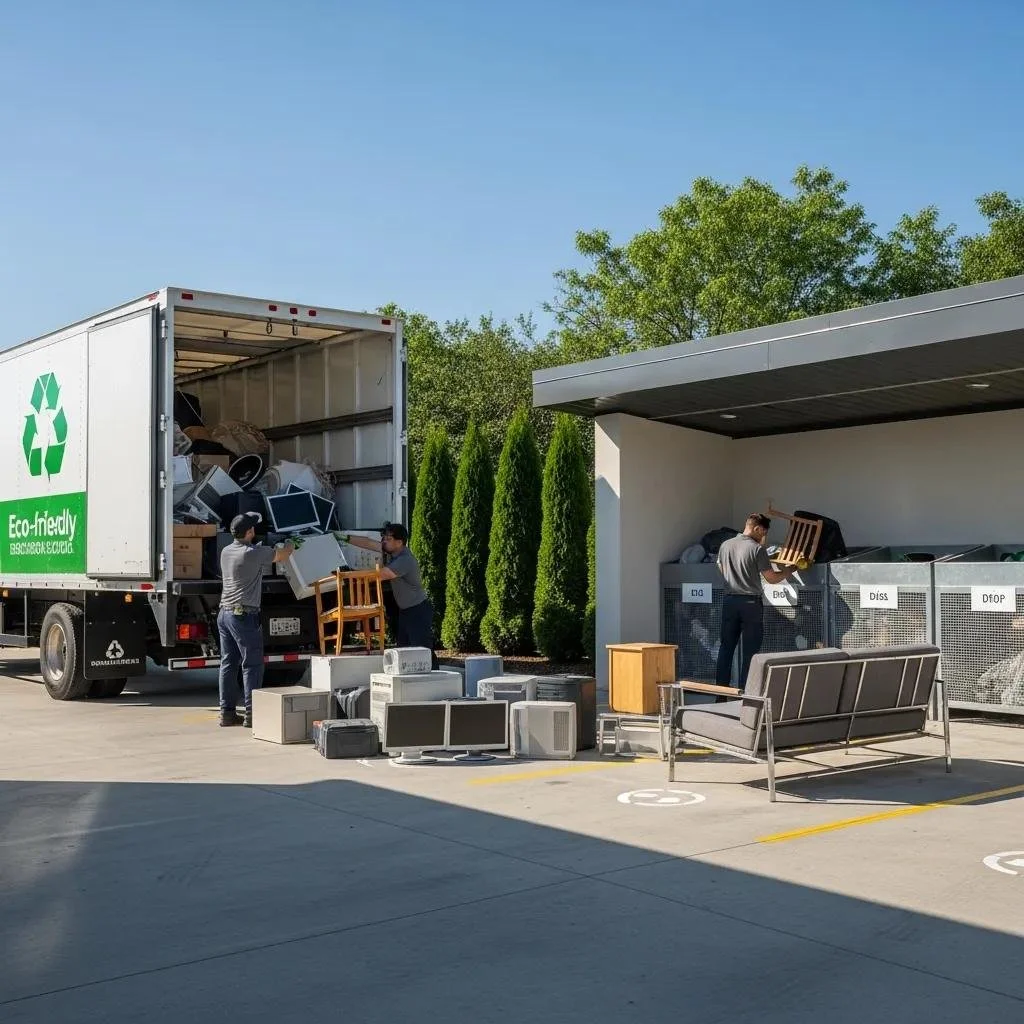
Eco‑friendly practices cut landfill waste and redirect usable goods to donation or recycling partners. You should expect providers to separate reusable items, send electronics to certified e‑waste recyclers, and work with local charities for furniture and household goods. Ask where items go and request donation receipts or recycling confirmations to verify environmental claims. The table below matches common item types to preferred disposal methods and the local partners you can ask about.
What Sustainable Disposal Methods Should You Expect?
Sustainable disposal includes recycling metals and electronics, donating usable furniture, refurbishing items for reuse, and safely handling hazardous materials through proper channels. A responsible provider will explain how they sort loads and identify donation‑worthy items before taking anything to landfill. For electronics and appliances, certified e‑waste processing captures hazardous components, while good furniture can often be sent to thrift stores or shelters. Confirm these routes when you get your estimate so your items follow the best practical path.
| Item Type | Preferred Disposal Method | Typical Local Partner / Value |
|---|---|---|
| Furniture | Donation / reuse | Local thrift stores or shelters |
| Appliances | Recycling / certified scrap | E‑waste or appliance recyclers |
| Electronics | E‑waste processing | Certified e‑waste recyclers |
| Construction debris | Segregation & recycling | Specialized recyclers or transfer stations |
How to verify eco‑friendly claims:
Request the names of donation or recycling partners used for your items.
Ask for documentation — donation receipts or recycling certificates — after pickup.
Choose providers who separate loads and explain their diversion rates.
At Best Price Junk Removal we highlight recycling and donation as part of our service model; ask about diversion when you request a free estimate.
What Service Logistics and Customer Support Should You Expect?
Smooth logistics and clear customer support keep the removal safe, on time, and with minimal disruption. Expect a simple scheduling flow: inquiry, estimate (remote or on‑site), confirmation, arrival window, and invoice. Professional crews arrive in uniform or with ID, use proper equipment for heavy items, protect floors and stairs when needed, and do a basic sweep after the job. Knowing typical timelines and equipment needs helps you prepare and anticipate any local constraints that affect same‑day scheduling or routing.
How Does Same-Day Junk Removal Work Across NYC Boroughs?
Same‑day availability depends on truck routing, disposal site hours, and job complexity. In dense areas like NYC, same‑day pickups are often possible for small to medium jobs if booked early. Travel time between boroughs and transfer station rules can change quotes and availability — companies usually prioritize same‑day slots for smaller loads or clear‑access jobs. When you request same‑day service, confirm cut‑off times, any expedited fees, and whether the company can provide immediate disposal or donation confirmations. That helps you balance convenience against cost and diversion options.
| Service Type | Typical Timeline / Equipment | Value for Customers |
|---|---|---|
| Single‑item pickup | Same‑day possible, small crew, cargo van | Fast and affordable for one or two items |
| Whole‑room clearout | 1–3 days, 2–3 person crew, medium truck | Efficient for moderate volume with minimal delay |
| Full‑property cleanout | 3+ days scheduling, large truck(s), multiple crews | Best for large volumes — needs upfront planning |
What Should You Expect During a Junk Removal Appointment?
Appointment preparation tips:
Make a clear item list and flag any hazardous or very heavy pieces.
Clear pathways and measure large items to ensure they fit through doors or stairwells.
Be available to confirm the estimate and answer questions on site.
Following these steps reduces delays and helps the crew finish the job safely and as agreed.
What Questions Should You Ask Before Hiring a Junk Removal Company?
Before you hire, ask focused questions that reveal the company’s scope, pricing transparency, environmental practices, and how they handle surprises. Key checks include proof of licensing and insurance, where items are disposed of or diverted, exactly what’s included in the quote, and cancellation or change policies. Use a simple scoring system — transparency, local experience, eco‑practices, and total cost — to compare responses and pick the best balance of price, reliability, and responsibility. Below are the main comparison points and verification steps to use.
Which Key Factors Help You Compare Junk Removal Companies Effectively?
Compare total cost and what it includes, not just the headline price — a low quote can omit labor, disposal, or travel fees that raise the final bill. Consider reputation and recent, specific reviews, and favor companies that document recycling or donation partnerships. Availability and scheduling flexibility matter for same‑day or short‑notice jobs; find out if the provider holds guaranteed time slots or works first‑available. Scoring each candidate on transparency, reliability, eco‑practices, and price gives you an objective way to choose.
How Can You Verify a Junk Removal Company’s Credentials and Service Quality?
Ask for certificates of insurance and licensing, and check business listings or local records to confirm legitimacy. Request photos of similar jobs or references and written confirmation of disposal pathways for larger loads. Use direct phrasing like "Can you provide an insurance certificate?" or "Which partners will you use for donations and recycling?" to prompt concrete answers. Verified credentials and documented past work reduce risk and ensure the company follows local rules and responsible disposal practices.
Final hiring checklist:
Confirm licensing and insurance and request documentation.
Get a written, itemized estimate that lists labor and disposal fees.
Verify recycling/donation partners and ask about documentation.
Compare answers across providers using a simple scoring rubric.
These final checks help turn your research into a confident hire and ensure the provider meets legal, logistical, and environmental expectations.
Best Price Junk Removal is a local, full‑service option focused on affordable pricing, free estimates, same‑day availability, and eco‑minded recycling and donation practices. Include local specialists like us when you request quotes to compare price transparency, diversion practices, and same‑day options tailored to urban logistics.
Frequently Asked Questions
1. What should I do to prepare for a junk removal appointment?
Prepare by listing the items to be removed and flagging anything hazardous or unusually heavy. Clear pathways so crews can move items easily and measure large pieces to make sure they fit through doors or stairwells. Be available by phone or in person during the appointment to answer questions and confirm details.
2. How can I ensure that my junk removal service is eco-friendly?
Ask the company where items will go and which recycling or donation partners they use. Request documentation like donation receipts or recycling certificates after the job. Ask how they sort loads and handle hazardous materials — reputable services will be transparent and willing to share proof of their practices.
3. What are the common red flags to watch for when hiring a junk removal company?
Watch for missing licensing or insurance, vague or overly positive reviews without detail, and reluctance to provide written estimates or documentation. Repeated complaints about hidden fees or improper disposal are another big red flag. Trustworthy companies are open about credentials and clear on pricing.
4. How do I compare different junk removal services effectively?
Create a scorecard based on pricing transparency, reliability, eco‑practices, and customer reviews. Look beyond the headline price to what’s included, such as labor and disposal fees. Check recent reviews and ask for documentation of recycling or donation partners. A structured comparison helps you pick the best fit for your needs.
5. What types of items are typically not accepted by junk removal services?
Many companies won’t take hazardous materials like chemicals, paint, or batteries, and some appliances (for example, refrigerators with refrigerants) require special handling. Construction debris or e‑waste may be excluded unless the company has specific recycling protocols. Always check with the provider for a full list of exclusions.
6. Can I schedule same-day junk removal, and what factors affect availability?
Yes — many providers offer same‑day service, but availability depends on job size, current scheduling, and disposal site hours. Smaller jobs are more likely to get same‑day slots. Ask about cut‑off times and any expedited fees so you understand the costs and logistics.
7. What should I expect in terms of customer support from a junk removal service?
Good support means clear communication from the first call to post‑job follow‑up. Expect timely responses, detailed estimates, and scheduling updates. Crews should arrive on time, with identification and the right equipment, and the company should provide an invoice and follow up to make sure you’re satisfied.
Conclusion
Choosing the right junk removal service makes decluttering easier and ensures responsible disposal. By knowing service types, checking provider reliability, and prioritizing eco‑friendly practices, you’ll make an informed choice that fits your needs. Take the next step by requesting a free estimate from a trusted local provider — a cleaner space starts with the right team.